The quick answer
Lower wholesale power prices may not lower your bill immediately because wholesale energy is only one part of the retail price, and retailers or utilities often buy power in advance. Network charges, policy costs, retail margins, fixed fees, and taxes can also keep the total bill from moving in step with spot prices. Relief may arrive later, but the timing depends on your contract, rate design, and billing cycle.

A drop in wholesale electricity prices can be real, large, and still fail to show up on your next household bill. That is not necessarily a mistake. Wholesale power is bought and sold before it reaches a home, while a retail bill is assembled from several cost buckets and spread over a billing period. Understanding that separation explains why lower wholesale prices may take months to reach a bill, and why some parts of the bill may not move at all.
Wholesale price is not the same as your retail rate
The wholesale price is the bulk price that generators receive for electricity. In many markets it is set close to the time of delivery, so it can rise and fall by the hour or half-hour. The retail rate is the price a household pays after the supplier adds or recovers the cost of delivery, policy programs, billing, customer service, risk, taxes, and margin. A retailer does not simply invoice a household the spot price from a low-price afternoon or a high-price evening; those are different market conditions, and the household plan usually blends costs across time (Lightning Energy, 2026).
That distinction matters when headlines say wholesale prices are falling. A lower spot price on a mild afternoon is not the same as a lower average cost for a supplier that has already contracted for power, expects a hot evening, or must serve customers on fixed rates. The question for a bill payer is not whether the spot market fell at some hour, but whether the supplier’s total cost of serving your plan fell and whether your rate design passes that change through.
Retailers and utilities often buy power in advance
In competitive electricity markets, retailers typically buy most of their power in advance at set prices. They accept a higher average price in exchange for less exposure to sudden spot-market moves. That is why a steep fall in spot prices may not reach households quickly: the cheaper spot power has to work its way through existing contracts, hedges, and billing periods (The Conversation, 2024). Fixed-rate plans can delay the effect even longer because the household has agreed to a set rate for a term.

Regulated utilities can have a different process, but the timing issue remains. A utility may recover fuel or purchased-power costs through rates and adjustment mechanisms that are reviewed or reset on their own schedule. The exact rules vary by state and utility. In either case, the spot market is an input, not the final bill. A persistent change in wholesale costs is more likely to affect rates than a brief dip.
This is also why the same wholesale headline can produce different outcomes for two neighbors. One may be on a fixed plan that runs for another year. Another may be on a variable plan that resets monthly. A third may be on a time-of-use plan that prices certain hours differently. The wholesale market is shared, but the pass-through path is not.
Your bill contains costs that wholesale prices do not directly set
Wholesale energy is only one component of a retail electricity bill. A household bill can also include network or delivery charges for poles, wires, substations, and meters; environmental or public-policy program costs; retail operating costs and margin; market fees; fixed customer charges; and taxes. As one retailer explains, contracts, network charges, fees, and tariff design all help determine the retail bill, so a lower wholesale cost does not guarantee a lower total bill (Lightning Energy, 2026).
The shares vary widely by market. Monash Climate Communication Hub cites AEMO data and notes that wholesale costs made up around 38 percent of an average electricity bill, with much of the rest going to poles and wires and retailer operating expenses and margins (Monash, 2025). In Great Britain, Ofgem’s price cap for July to September 2026 gave illustrative shares of about 45 percent for wholesale energy, 25 percent for networks, 16 percent for operating, debt, and industry costs, and 6 percent for policy costs, with the rest mainly VAT and supplier profit (energy.org.uk, 2026). Those are not U.S. figures, but they show the same structural point: a large wholesale change is diluted by other costs before it reaches a household.
For a U.S. household, the labels differ. A bill may separate a supply or generation charge from a delivery or distribution charge, and it may include fixed customer charges, demand charges, riders, taxes, and other fees. The exact structure depends on the state, utility, and plan. The practical lesson is to read the bill as a set of components, not as a single energy price.
A worked example: a 20 percent wholesale reduction on a $150 bill
To see why a large wholesale move can look small at the bill level, use an illustrative example. Assume a monthly bill of $150, a wholesale energy share of 40 percent, a 20 percent fall in wholesale energy cost, no change in usage, and full and immediate pass-through of the lower cost. All other charges are held constant.
First, find the wholesale energy portion: $150 × 0.40 = $60. Then apply the 20 percent reduction: $60 × 0.20 = $12. The illustrative new bill would be $150 − $12 = $138. That is an 8 percent reduction in the total bill, even though wholesale energy fell by 20 percent. The arithmetic is $12 ÷ $150 = 0.08.
Now add the timing problem. If forward contracts mean only half of that wholesale cost is exposed to the new lower price in the current period, the reduction is $6 rather than $12, or 4 percent of the total bill. If the rate is fixed for another six months, the current-period reduction may be zero. The example is hypothetical and excludes taxes, fixed fees, and changes in usage. It is meant to show why the pass-through percentage matters as much as the wholesale headline.
What can delay or dilute the effect
Several mechanisms can sit between a wholesale price change and a household bill. Forward contracts and hedges are the main ones: suppliers buy ahead to manage risk, so current spot prices may not match the cost of the power being delivered now (The Conversation, 2024). Fixed-rate plans lock the household price for a term. Regulated rate reviews and fuel-adjustment mechanisms can move on a separate calendar. Billing periods can lag the market. And other charges, such as network costs and policy programs, are set by regulation or program rules rather than by the hourly spot price.
Usage and weather can also overwhelm the wholesale effect. A household that uses more kilowatt-hours in a hotter month can see a higher bill even if the rate per kilowatt-hour falls. A household with a large fixed charge and low usage may see little change from an energy-only reduction. That is why comparing total dollar amounts across different seasons can mislead. Compare equivalent billing periods and separate usage from rate and fee changes.
| Bill component | What it pays for | Immediate effect of lower wholesale prices |
|---|---|---|
| Wholesale energy or supply charge | The electricity itself, often bought through contracts or hedges. | May fall eventually, but often only as contracts roll over or rates reset. A fixed-rate plan may not change mid-term. |
| Network or delivery charge | Poles, wires, substations, meters, and moving power to the home. | Usually not directly tied to the spot market; changes come through regulatory reviews or utility rate cases. |
| Policy and program costs | Public programs, environmental schemes, and other mandated costs. | Set by policy or program rules, not by hourly wholesale prices. |
| Retail margin and operating costs | Billing, customer service, risk management, and supplier profit. | Can change competitively, but not mechanically with spot prices. |
| Fixed fees and taxes | Customer charges, metering fees, and government taxes. | Usually unchanged by a wholesale price move; they can soften or hide the effect. |
The table describes general mechanisms. Exact timing and cost recovery rules vary by state, utility, and retail plan.
What bill payers can check
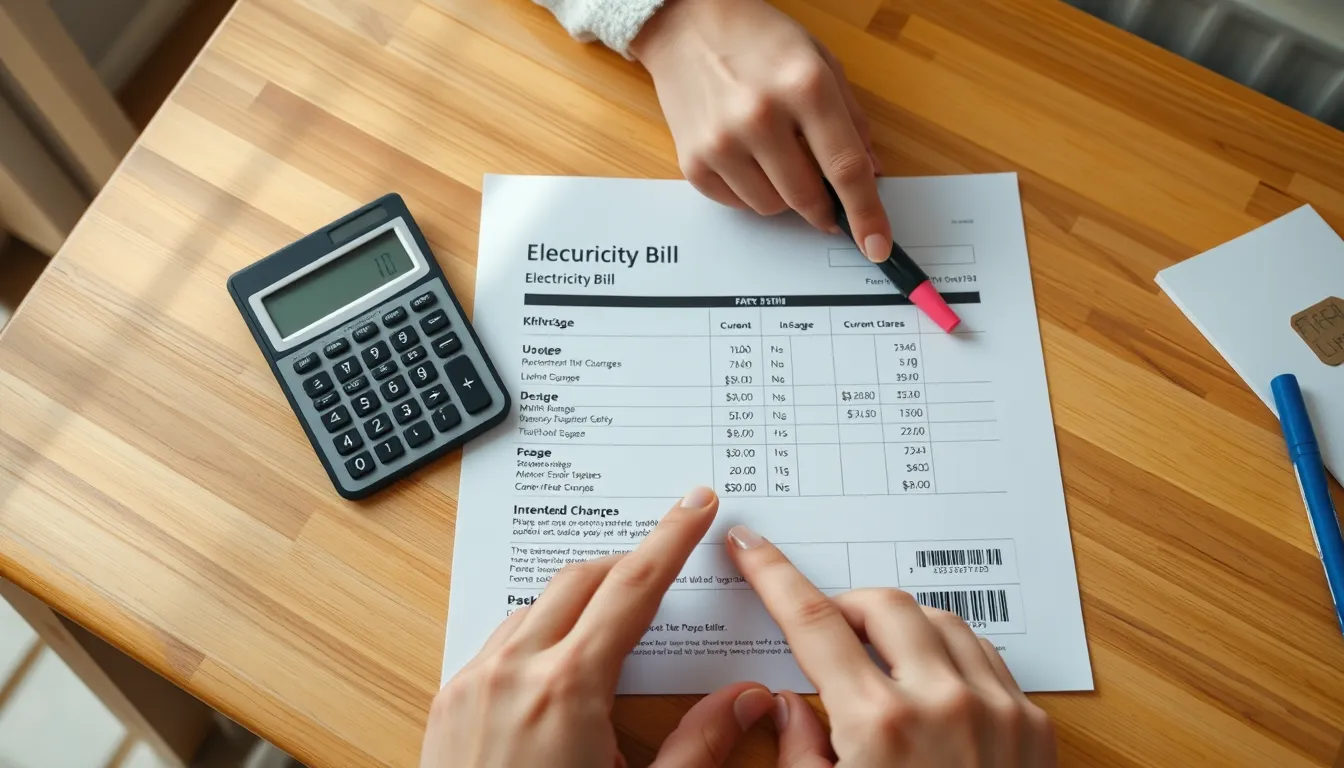
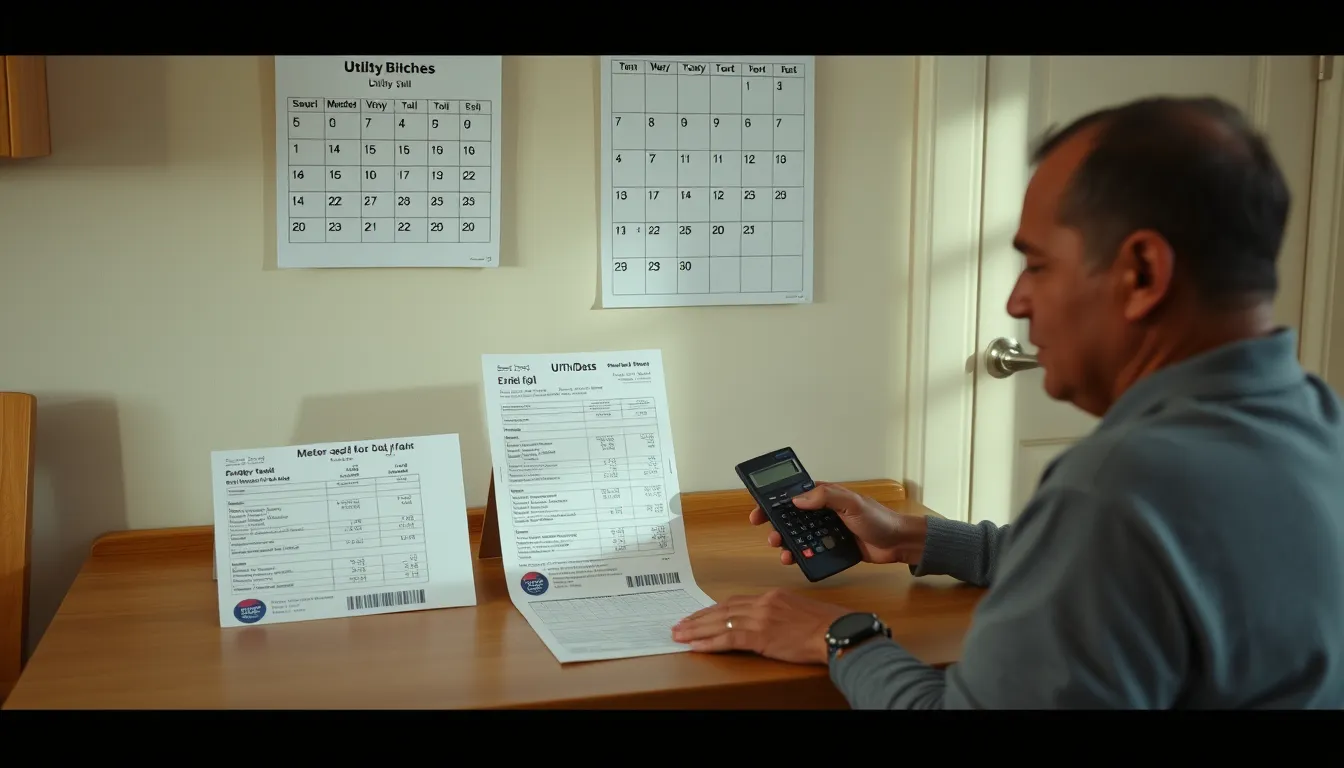
If wholesale prices have fallen and you want to know why your bill has not, start with the bill itself. Gather two recent bills with the same number of billing days if possible. Write down the kilowatt-hours used, the supply or generation rate, the delivery or network charge, fixed fees, taxes, and the total. Then compare the supply rate and the usage separately. This prevents a change in weather or billing days from being mistaken for a rate change.
- Identify your rate type. A fixed-rate plan will not reset mid-term. A variable plan may follow supplier costs with its own schedule. A time-of-use plan prices hours differently, so an average spot-price headline may not describe your experience.
- Separate supply from delivery. The supply charge is the part most connected to wholesale energy. Delivery and network charges are usually driven by other costs and regulatory decisions.
- Check fixed charges and fees. A monthly customer charge, meter fee, or policy rider can keep the total bill stable even when the energy component moves.
- Ask your utility or retail supplier. Ask how wholesale costs are reflected in your rate, when the rate can change, and whether a fuel adjustment or purchased-power adjustment applies. The answer will be specific to your plan and state.
- Renters and homeowners can use the same check. Renters may not control major equipment, but they can still review the rate plan and usage. Homeowners considering equipment changes should compare operating cost using their current all-in rate, not a spot-price headline.
Appliance buyers should treat wholesale prices as background, not as a direct operating-cost input. A space heater, heat pump, or refrigerator uses kilowatt-hours, and the cost depends on the rate you actually pay. Use your current rate and perhaps a higher and lower rate to see a range. Do not assume that a lower wholesale price automatically lowers the cost of running a new appliance.
Common mistakes to avoid
- Treating the spot price as your rate. The spot price is a wholesale market price. Your retail rate includes other costs and risk management. Consequence: overestimating how much a wholesale drop should save you.
- Comparing bills from different seasons or billing lengths. A 35-day summer bill is not comparable to a 28-day spring bill. Consequence: misreading a usage change as a rate change.
- Expecting a fixed-rate bill to fall mid-term. A fixed rate is fixed for its term, subject to the contract. Consequence: surprise when the bill does not move.
- Ignoring delivery charges and fixed fees. These can be a large share of the bill and often move on separate schedules. Consequence: expecting a total-bill reduction that the rate design does not deliver.
A practical next step
Pull your last two electricity bills and compare them over equivalent billing days. Write down the following: billing days, total kilowatt-hours, supply or generation charge, delivery or network charge, fixed fees, taxes, and total bill. Calculate your effective supply rate by dividing the supply charge by kilowatt-hours. Then ask whether the change you see is in usage, the supply rate, or a non-energy charge. If the supply rate has not changed on a fixed plan, a lower wholesale spot price is not expected to change your bill immediately. If you are choosing a new plan, compare total cost at your own usage and check the rate type, term, and fees before switching.
Lower wholesale prices can eventually help households, but the path is indirect. The size and timing of the benefit depend on contracts, regulation, rate design, and your own usage. A bill that does not fall right away is not proof that wholesale prices do not matter. It is evidence that the retail bill is a bundle of costs, and the wholesale component is only one part of that bundle.
FAQ
If wholesale prices fall, why is my fixed-rate bill unchanged?
A fixed-rate plan sets your price for a term. The wholesale market can move, but your rate does not reset until the term ends or the supplier changes terms allowed by your contract. Check your plan documents for the rate period and renewal terms.
Do lower wholesale prices ever reduce household bills?
They can, but usually with a lag and only if the change persists. Retailers and utilities may pass through lower costs when contracts renew or rates are reset. Other bill components and your usage can offset the effect.
What should I compare if I think my bill should have fallen?
Compare equivalent billing periods: number of days, kWh used, supply or energy rate, delivery or network charges, fixed fees, and taxes. A lower wholesale spot price does not automatically change any of those except, eventually, the energy component.
Follow the evidence
Sources & references
- The Conversation. Wholesale power prices are falling fast – but consumers will have to wait for relief. Here’s why. February 7, 2024. https://theconversation.com/wholesale-power-prices-are-falling-fast-but-consumers-will-have-to-wait-for-relief-heres-why-222495
- Lightning Energy. Why Retail Electricity Bills Can Rise as Wholesale Prices Fall. Updated September 21, 2026. https://lightning-energy.com.au/blog/power-bill-up-wholesale-prices-down
- Monash Climate Communication Hub. Why wholesale energy prices fall faster than household bills. November 6, 2025. https://www.monash.edu/mcccrh/climate-communicators/changing-climates/digital-news/changing-climates-articles/hy-wholesale-energy-prices-fall-faster-than-household-bills
- energy.org.uk. Why cheap wholesale electricity doesn't mean cheap bills. Updated October 3, 2026. https://energy.org.uk/articles/wholesale-electricity-household-bills
Useful terms in this guide
- Wholesale electricity price
- The price generators receive for bulk electricity before delivery, retail, and tax costs are added.
- Spot price
- The price for electricity delivered at a particular time in the wholesale market; it can change by the hour or half-hour.
- Forward contract or hedge
- An agreement to buy electricity at a set price for future delivery, used to reduce price volatility.
- Network charges
- Charges for moving electricity through transmission and distribution wires, often a large regulated part of a bill.
Have a question about these numbers?
Tell us what needs a closer look.