The quick answer
A heat pump water heater usually costs more to buy and install than an electric storage water heater, but it can use far less energy. In a standardized comparison, an ENERGY STAR heat pump model used 984 kWh per year versus 3,437 kWh for conventional electric storage, saving about $449 per year at 18.31¢/kWh before fixed charges. The better choice depends on installed cost, hot-water use, space, climate, electricity rate, incentives, and how long you stay in the home.
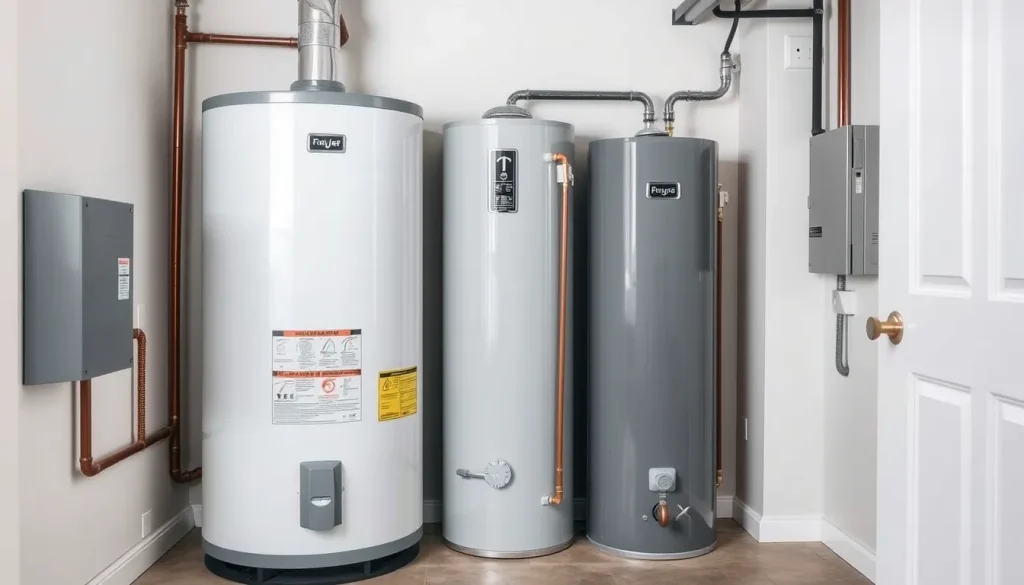
A heat pump water heater and an electric storage water heater can deliver the same household service—hot water from a tank—but they use different equipment and different amounts of electricity. For a bill payer or appliance buyer, the useful comparison is not just the price on the box. It is the installed cost, the annual energy use, the electricity rate, the available incentives, and the conditions in the home. Water heating is a major household utility expense, so small differences in efficiency can matter over several years (Utah Clean Energy).
Start with the cost factors, not a single price
A heat pump water heater generally costs more upfront than a conventional electric storage tank. A. O. Smith lists its Voltex heat pump water heaters at roughly $1,200 to $3,500 depending on size and features, with standard 50-gallon models around $1,200 to $1,800 before incentives. The company also notes that installation costs depend on home-specific factors such as electrical panel capacity and plumbing (A. O. Smith). ENERGY STAR describes heat pump water heaters as generally more expensive to install than standard models and points to federal tax credits and local incentives as ways to reduce the net cost (ENERGY STAR).
That upfront difference is only one layer. A conventional electric storage water heater is a relatively simple resistance-heated tank. A heat pump water heater uses a compressor and heat-exchange system, so it may need adequate air volume, condensate management, and electrical work that a simple tank replacement does not. Those requirements vary by model and by house. A quote for one model is not automatically comparable with a quote for another.
| Cost factor | Heat pump water heater | Electric storage water heater | What to verify |
|---|---|---|---|
| Equipment price | Usually higher; A. O. Smith Voltex range is about $1,200 to $3,500. | Generally lower upfront for a basic electric tank. | Model capacity, warranty, efficiency, and features. |
| Installation | May need electrical work, condensate drain, airflow, and permits. | Often a simpler tank replacement. | Itemized labor, electrical, plumbing, permits, removal, and tax. |
| Annual energy | Lower in standardized comparisons; one example is 984 kWh per year. | Higher; one benchmark is 3,437 kWh per year. | EnergyGuide label, local rate, hot-water use, and operating mode. |
| Space and ambient conditions | Needs air circulation and may cool or dehumidify surrounding air. | Needs space but fewer air and condensate requirements. | Room size, temperature, noise, and drain location. |
| Incentives | May qualify for federal or local incentives. | Eligibility varies by program and model. | Program rules, eligible model list, paperwork, and pre-approval. |
| Maintenance | Filter cleaning and condensate checks in addition to tank care. | Tank flushing and anode checks. | Manufacturer schedule and warranty terms. |
How annual energy use becomes a bill
The basic calculation is annual energy cost = annual kWh × electricity price per kWh. The result covers usage charges only; it does not include fixed monthly charges, taxes, demand charges, or time-of-use effects unless you add them separately. Use the water heater’s EnergyGuide label or measured kWh when available. If you only have a benchmark, label it as an estimate.

In a standardized comparison cited by HomeBillLab, a conventional electric storage benchmark uses 3,437 kWh per year, while an ENERGY STAR heat pump water heater example uses 984 kWh per year. That is 2,453 kWh less, or about 71% lower electricity use. At the U.S. Energy Information Administration’s July 2026 residential average electricity price of 18.31¢/kWh, the arithmetic is 3,437 × $0.1831 = about $629 per year for conventional electric storage and 984 × $0.1831 = about $180 per year for the heat pump example. The difference is about $449 per year (HomeBillLab).
ENERGY STAR gives a different illustrative result: a family of four could save nearly $550 per year compared with a standard electric water heater. The two figures are not contradictory; they rest on different household and modeling assumptions. They should not be treated as a guarantee for any specific home (ENERGY STAR; HomeBillLab).
Worked example: rate sensitivity and simple payback
Because the electricity rate is a multiplier, the annual savings move with local prices. The table below keeps the same kWh benchmarks and changes only the rate. These rates are illustrative scenarios, not forecasts.
| Electricity price | Conventional electric storage | Heat pump example | Annual difference |
|---|---|---|---|
| 12¢/kWh | $412 | $118 | $294 |
| 18.31¢/kWh | $629 | $180 | $449 |
| 25¢/kWh | $859 | $246 | $613 |
Simple payback = (installed cost of heat pump water heater − installed cost of electric storage water heater) ÷ annual bill savings. If the net installed premium were $1,500 and the modeled savings were $449 per year, simple payback would be about 3.3 years. If the premium were $3,000, payback would be about 6.7 years. Those premiums are hypothetical, not quotes. Incentives reduce the net premium if the model and project qualify. ENERGY STAR describes average payback periods of 3 to 6 years compared with a traditional electric water heater for its illustrative case, which shows why the installed price and the local rate both matter (ENERGY STAR).
When a heat pump water heater may be the better cost choice
A heat pump water heater is more likely to make economic sense when the home already has an electric water heater, hot-water demand is substantial, electricity is expensive, the unit can be installed in a space with suitable air volume and temperature, and the owner expects to stay long enough to earn back the premium. Incentives can shorten payback. A larger tank or a model with a higher first-hour rating may cost more, but it can matter for households that run several hot-water uses at once. Compare like-for-like capacity and recovery performance, not just tank gallons.
Do not assume a heat pump water heater behaves the same in every location. It extracts heat from the surrounding air, so a cold garage or a tight closet can affect performance and may require a different model or operating mode. Manufacturers publish ambient-temperature ranges and clearance requirements; use those documents and a qualified installer’s assessment rather than a generic rule.
When electric storage may remain the practical choice
A conventional electric storage water heater can be the lower-risk choice when the upfront budget is tight, the replacement must happen quickly, the available space is too small for a heat pump unit’s airflow or condensate needs, or the home cannot easily support the electrical work. It is also the simpler comparison for a renter or a landlord who needs a like-for-like replacement. That does not make it the cheaper long-run option; it means the installed cost and site constraints may outweigh the modeled energy savings.
Common mistakes that distort the comparison
- Comparing equipment prices only. The installed cost can include electrical work, plumbing changes, permits, condensate handling, removal, and tax.
- Using nameplate watts as annual use. A heat pump water heater’s compressor cycles and may use backup resistance heat, so annual kWh or an EnergyGuide estimate is more useful than a single watt rating.
- Ignoring the electricity rate. The same kWh difference is worth less at a low rate and more at a high rate. Fixed fees and taxes do not change with the appliance’s kWh in a simple comparison.
- Forgetting incentives or assuming they are automatic. Programs can require an eligible model, pre-approval, and paperwork.
- Mixing capacities. A 50-gallon heat pump model and a 50-gallon electric tank may have different first-hour ratings and usable hot-water performance.
Information to gather before you choose
Use a short checklist so quotes are comparable:
- Current water heater type, tank size, first-hour rating, and age.
- Annual kWh from the EnergyGuide label if available, or a clearly labeled benchmark estimate.
- Your electricity price per kWh, including whether it is a flat rate, tiered rate, or time-of-use rate.
- Available space, ambient temperature, drain or condensate path, noise sensitivity, and electrical panel capacity.
- Itemized installed quotes for equipment, labor, electrical, plumbing, permits, condensate, removal, and tax.
- Incentive eligibility, required model list, application steps, and whether the incentive is a rebate or tax credit.
The final decision should use the net installed cost after confirmed incentives and the annual bill savings at your own rate. If a contractor cannot provide the model’s annual kWh, ask for the EnergyGuide or manufacturer documentation. Then compare the resulting simple payback with your expected ownership period and with the non-cost constraints in your home. A heat pump water heater can be the lower-cost choice over time, but only when the installation works and the savings are large enough to repay the premium. The practical next step is to request at least two itemized quotes and calculate payback with your own electricity rate, not a national average.
FAQ
Does a heat pump water heater lower the bill in every home?
No. Savings depend on installed cost, hot-water demand, electricity rate, ambient temperature, operating mode, and whether the home can accommodate the unit. A heat pump water heater can use less electricity, but a high installation premium or low hot-water use can lengthen payback.
Can a heat pump water heater go in a cold garage?
It depends on the model and the garage conditions. Heat pump water heaters extract heat from surrounding air, so cold ambient temperatures can affect performance. Check the manufacturer's ambient-temperature range, clearance requirements, and whether backup resistance heat is used.
How should I compare a heat pump quote with an electric storage quote?
Compare itemized installed costs, not just equipment prices. Match tank capacity and first-hour rating, include electrical and plumbing work, permits, condensate handling, removal, tax, and confirmed incentives, then estimate annual energy cost using each model's annual kWh and your own electricity rate.
Follow the evidence
Sources & references
- ENERGY STAR. What Goes into the Cost of Installing a Heat Pump Water Heater? February 2, 2024. https://www.energystar.gov/products/ask-the-experts/what-goes-cost-installing-heat-pump-water-heater
- A. O. Smith. How Much Does a Heat Pump Water Heater Cost? Prices, Rebates & Savings. https://www.hotwater.com/info-center/how-much-does-a-heat-pump-water-heater-cost.html
- HomeBillLab. Heat Pump Water Heater vs Electric Water Heater: Running-Cost Comparison (2026). https://homebilllab.com/us/hot-water/heat-pump-water-heater-vs-electric-water-heater/
- Utah Clean Energy. The Layperson’s Guide to Residential Water Heaters. https://utahcleanenergy.org/the-laypersons-guide-to-residential-water-heaters/
Useful terms in this guide
- Heat pump water heater
- A water heater that uses a refrigeration cycle to move heat from surrounding air into a storage tank rather than relying only on electric resistance elements.
- Electric resistance storage water heater
- A conventional tank-style water heater that heats water with electric resistance elements.
- Annual kWh
- The electricity a water heater uses over a year, measured in kilowatt-hours; multiplying it by the price per kWh gives an energy-cost estimate.
- Simple payback
- The net installed cost premium of one option divided by its annual bill savings, expressed in years.
Have a question about these numbers?
Tell us what needs a closer look.