The quick answer
Natural gas is a fossil fuel used in many U.S. homes for space heating, water heating, cooking, and clothes drying. Its cost and environmental trade-offs depend on local prices, equipment efficiency, and how much gas a household uses. Comparing natural gas with electricity requires converting both to a common unit of delivered heat, such as cost per million Btu, rather than comparing price per therm with price per kWh.
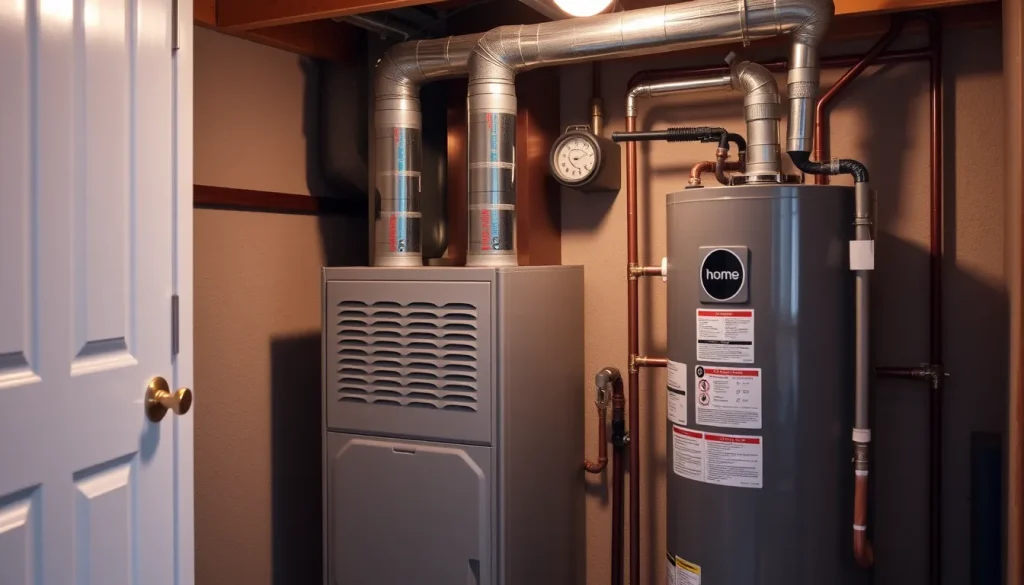
Natural gas is a fossil fuel that many U.S. households use for space heating, water heating, cooking, and clothes drying. Its role in a home energy plan depends on whether gas service is available, how much heating and hot water the household needs, and how gas prices compare with electricity prices in that area. This article explains what natural gas is used for, what drives its price, and how to compare it fairly with electric alternatives.
What natural gas is used for in U.S. homes
The United States consumed 32.50 trillion cubic feet (Tcf) of natural gas in 2023, according to the U.S. Energy Information Administration (EIA). The residential sector accounted for 4.48 Tcf, or 14% of total U.S. natural gas consumption. The electric power sector used 40%, industry 32%, commercial buildings 10%, and transportation 4% (EIA).
In homes, natural gas is most commonly used for space heating and water heating, followed by cooking and clothes drying. Nationally, space heating and air conditioning together accounted for 52% of household energy consumption in 2020, while water heating, lighting, and refrigeration accounted for 25% (EIA). Those figures cover all household energy, not just natural gas, but they show why heating and hot water are the largest opportunities for managing gas use.
Natural gas is mostly methane (CH4), with smaller amounts of natural gas liquids and nonhydrocarbon gases such as carbon dioxide and water vapor (EIA). When burned, it releases heat that can warm a home, heat water, or cook food.

How natural gas reaches a home and what appears on a bill
Natural gas is produced from underground formations, processed, and moved through pipelines to local utilities, which deliver it to homes. Residential customers typically pay a commodity or supply charge for the gas itself, plus distribution charges for delivery, taxes, and other fees. The delivered price per therm is therefore not the same as the wholesale market price.
Most residential bills use the therm as the unit of energy. One therm equals 100,000 British thermal units (Btu). Some utilities bill in hundreds of cubic feet (Ccf); one Ccf is 100 cubic feet of gas, and its heat content is close to one therm, though the exact conversion can vary slightly. Check the unit printed on your bill before comparing rates.
What drives natural gas prices
Natural gas prices are set by supply and demand. According to EIA, three major supply-side factors affect prices: the amount of natural gas production, the volume of gas in storage, and the volume of imports and exports. Three major demand-side factors affect prices: variations in winter and summer weather, economic growth, and the availability and prices of other fuels (EIA).
Short-term changes in supply or demand can cause large price swings, especially in winter, because infrastructure constraints can limit how quickly gas moves to where it is needed, and many gas consumers cannot switch fuels quickly (EIA). A cold snap can increase heating demand and draw down storage, while a production disruption or pipeline constraint can reduce supply. Because the electric power sector is the largest consumer of natural gas, changes in gas prices can also affect the cost of generating electricity (EIA).
For a household, the bill impact depends on how the local utility’s tariff passes costs through. Some utilities adjust commodity charges monthly or seasonally; others use a fixed rate or a purchased gas adjustment mechanism. Fixed customer charges and distribution charges do not change with usage, so a household’s bill can rise even when therms used are similar to the previous month.
Natural gas versus electricity for home heating: how to compare trade-offs
Comparing natural gas with electricity starts with the cost of delivered heat, not the price of fuel alone. A therm of natural gas and a kilowatt-hour (kWh) of electricity contain different amounts of energy, and heating equipment converts that energy at different efficiencies. Natural gas furnaces and water heaters are rated by annual fuel utilization efficiency (AFUE); a higher AFUE means more of the fuel’s heat reaches the home. Electric resistance heating converts nearly all electricity to heat at the point of use, while electric heat pumps move heat rather than creating it, so their efficiency is described by a coefficient of performance (COP).
To compare fuels, convert each option to a cost per million Btu of delivered heat. The formulas are:
- Natural gas cost per million Btu = (price per therm ÷ AFUE) × 10. (Because one therm is 100,000 Btu, 10 therms equal 1 million Btu.)
- Electric resistance cost per million Btu = (price per kWh × 293.1) ÷ 1.0. (One kWh is about 3,412 Btu, so about 293.1 kWh are needed for 1 million Btu.)
- Heat pump cost per million Btu = (price per kWh × 293.1) ÷ COP.
The following table uses hypothetical prices and efficiencies to show the method. These are illustrative assumptions, not current prices or typical performance.
| Heating option | Assumed efficiency | Assumed fuel price | Cost per million Btu |
|---|---|---|---|
| Natural gas furnace | 90% AFUE | $1.20 per therm | $13.33 |
| Electric resistance heat | 100% (COP 1.0) | $0.16 per kWh | $46.90 |
| Electric heat pump | COP 3.0 | $0.16 per kWh | $15.63 |
Calculations: natural gas = ($1.20 ÷ 0.90) × 10 = $13.33. Electric resistance = ($0.16 × 293.1) ÷ 1.0 = $46.90. Heat pump = ($0.16 × 293.1) ÷ 3.0 = $15.63. Under these assumptions, natural gas has a lower operating cost per unit of heat than electric resistance, and the heat pump is closer to natural gas. Different local prices, equipment efficiencies, and climate conditions can change the ranking. A heat pump’s COP varies with outdoor temperature; a furnace’s AFUE is a rated annual efficiency; and installation, maintenance, and fixed charges are not included in this fuel-cost comparison.
Other trade-offs matter. Natural gas appliances require venting and gas piping, and they should be installed and serviced by qualified professionals. Electric heat pumps can provide both heating and cooling, but they may require electrical panel upgrades or ductwork changes. Natural gas is a fossil fuel, and burning it produces carbon dioxide; methane leakage in the production and delivery system can add to its climate impact. Electricity may come from a mix of sources, so the emissions of electric heating depend on how the local grid generates power. Households should consider operating cost, upfront cost, incentives, equipment lifespan, comfort, and environmental goals together.
How to estimate your own natural gas use and cost
Start with your natural gas bills for the past 12 months. Separate usage charges (based on therms or Ccf) from fixed charges (customer charges, distribution charges, taxes, and fees). Calculate your average price per therm by dividing usage charges by therms used in each billing period. Do not divide the total bill by therms if you want the marginal cost of extra gas use, because fixed charges do not change with usage.
For an appliance-level estimate, find the appliance’s AFUE or COP, its rated input in Btu per hour, and an estimate of annual hours of operation. Use:
Annual therms = (Btu input per hour × hours per year × load factor) ÷ (100,000 × AFUE)
Then multiply annual therms by the price per therm. The load factor is the fraction of the year the appliance actually runs at its rated input; it is often the hardest input to estimate. For a furnace, a heating load calculation or an energy audit is more reliable than guessing. For a water heater, the number of people, hot-water use habits, and incoming water temperature matter. For cooking and clothes drying, use the appliance’s energy guide label or manufacturer documentation when available.
Renters can ask the landlord or utility for the account’s usage history and appliance models. Homeowners can check nameplates, the AFUE rating, and the utility’s rate schedule. A home energy audit can identify air leaks, insulation gaps, and duct problems that increase heating and water-heating costs, regardless of fuel type.
Common mistakes when comparing natural gas options
- Comparing fuel prices directly. A dollar per therm and a dollar per kWh are not comparable units. Convert both to cost per million Btu of delivered heat.
- Ignoring efficiency. A cheap fuel used in inefficient equipment can cost more to operate than a more expensive fuel used efficiently. Always include AFUE or COP.
- Looking only at commodity prices. Fixed charges, distribution charges, taxes, and seasonal rate structures can make the delivered price per therm different from the commodity price.
- Overlooking installation and maintenance. Gas appliances need venting and professional service; electric heat pumps may need electrical upgrades. These costs can outweigh operating-cost differences.
What to do next
Gather your last 12 months of natural gas bills and identify therms used, usage charges, and fixed charges for each period. Compare equivalent billing periods rather than a single month. If you are considering a heating or water-heating upgrade, request quotes from qualified contractors and ask for the equipment’s AFUE or COP, installed cost, expected maintenance, and any available incentives. If you rent, ask your landlord for the appliance models and efficiency ratings and for permission before making changes. For any gas installation, repair, or venting work, use a licensed professional.
FAQ
Is natural gas cheaper than electricity for heating?
It depends on local prices, equipment efficiency, and climate. Compare cost per million Btu of delivered heat using current rates and AFUE or COP; a heat pump can be competitive with natural gas in some areas.
Why did my natural gas bill increase even though my usage was similar?
Bills can rise from higher commodity prices, rate changes, fixed charges, taxes, or colder weather that increases usage. Compare equivalent billing days and separate usage charges from fixed charges.
What is the difference between a therm and a Ccf?
A therm is 100,000 Btu of heat energy. A Ccf is 100 cubic feet of gas; its heat content is roughly equivalent to one therm but can vary slightly, so check the unit on your bill.
Can I switch from natural gas to electric heating?
It may be possible, but it requires new equipment, possibly electrical panel upgrades, and a cost comparison. Consult qualified HVAC and electrical professionals and check local incentives and codes.
Follow the evidence
Sources & references
- U.S. Energy Information Administration. 'Use of energy in homes.' https://www.eia.gov/Energyexplained/use-of-energy/homes.php. Data for 2020.
- U.S. Energy Information Administration. 'Factors affecting natural gas prices.' https://www.eia.gov/energyexplained/natural-gas/factors-affecting-natural-gas-prices.php.
- U.S. Energy Information Administration. 'Natural gas explained.' https://www.eia.gov/energyexplained/natural-gas/.
- U.S. Energy Information Administration. 'Use of natural gas.' https://www.eia.gov/energyexplained/natural-gas/use-of-natural-gas.php. Data for 2023.
Useful terms in this guide
- Therm
- A unit of heat energy equal to 100,000 Btu, often used in natural gas billing.
- AFUE
- Annual Fuel Utilization Efficiency, a rating of how efficiently a gas furnace or water heater converts fuel to heat over a year.
- COP
- Coefficient of Performance, a measure of heat pump efficiency; higher COP means more heat moved per unit of electricity.
- Commodity charge
- The portion of a natural gas bill for the gas itself, separate from delivery and fixed charges.
Have a question about these numbers?
Tell us what needs a closer look.