The quick answer
Smart plugs can be worth it for energy savings, but only in specific cases: when they cut power to a device with meaningful standby use for many hours, and when the plug's own small power draw and purchase cost are lower than the energy saved. They are not a general bill-reduction device, and savings for ordinary TVs or computers are often modest. Measure the appliance's standby watts and your rate before buying.
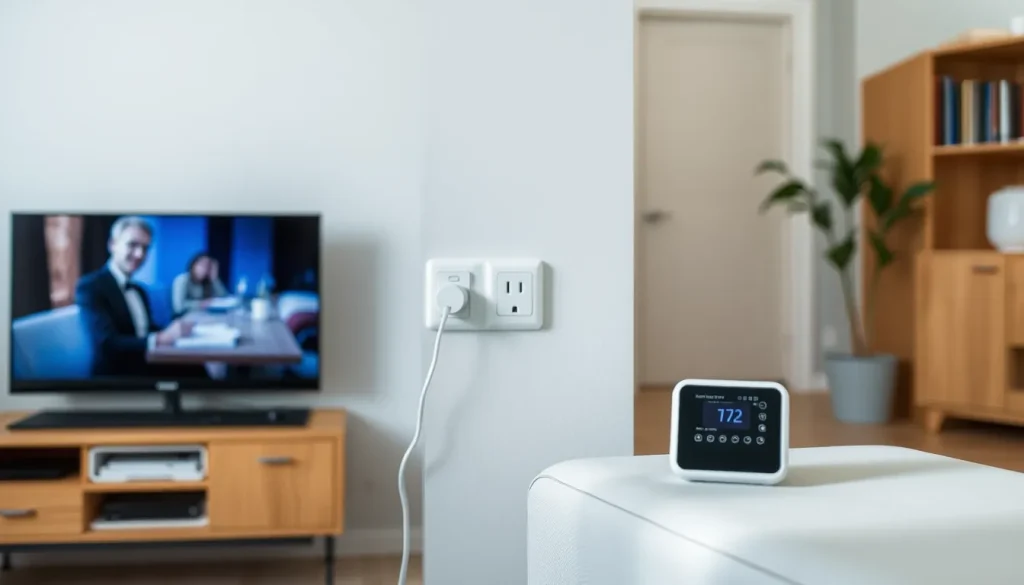
A smart plug is best understood as a remote switch and, on some models, an energy monitor. It does not make a TV, computer, or coffee maker more efficient while the appliance is doing useful work. The energy-savings case rests on one narrower job: cutting power when an appliance would otherwise sit in standby, follow an unnecessary timer, or be left on by habit.
The Spruce’s electrician-focused guide reports that adding a smart plug may help a household save as much as $20 to $60 per year [1]. That is a favorable-case estimate for a plug used on a suitable load, not a guaranteed result for every outlet. Energy Product Evaluations explains that savings rise with the appliance’s standby consumption and with the number of hours the plug cuts power, while the plug’s own internal power use slightly offsets the savings [2]. A 2024 Which? analysis of large consumer tech reached a similar caution: standby savings can be so small that they may not make much difference to a bill, although the result depends on the device and the tariff [3]. That test used a UK price cap figure, so the dollar result does not transfer directly, but the caution does.
What a smart plug can and cannot save
Smart plugs are useful for control. They can turn a lamp, fan, coffee maker, or entertainment device off on a schedule or from a phone. Some models report energy use. WIRED’s smart plug guide notes that they add power control to any outlet but are not ideal for everything [4]. The distinction matters for energy savings.
- Can save: standby power that would otherwise be drawn for hours each day, plus run time that would otherwise be forgotten.
- Can save: power to devices that are easy to leave on but do not need to be on at all hours, when a schedule matches the household.
- Cannot save: the energy an appliance uses while it is doing its main job. A smart plug cannot make a heater, refrigerator, or computer more efficient.
- Cannot guarantee: savings when the appliance already has a hard off switch, is unplugged, or needs continuous power for clocks, updates, security, or medical reasons.
The arithmetic that decides whether it pays
The useful question is not whether smart plugs save energy in theory. It is whether one plug on one appliance saves enough kilowatt-hours to cover the plug’s purchase price, its own small power draw, and the inconvenience of scheduling. Use this calculation:

Energy cut per year (kWh) = standby watts / 1,000 * hours off per day * 365
Gross annual savings = energy cut per year * your price per kWh
Net annual energy savings = gross annual savings - plug overhead cost
Simple payback in years = plug purchase price / net annual energy savings
Here, watts measure power, kWh measures energy, and the price per kWh should be the marginal rate you pay for another kilowatt-hour. If your bill has time-of-use periods, use the rate that applies when the plug actually shifts or cuts consumption. The example below uses illustrative inputs, not a current price quote: a $0.18 per kWh rate, a $10 plug, 16 hours per day of cutoff, 365 days, and a 1-watt internal draw from the plug itself.
| Input or result | Low-standby device | Higher-standby device |
|---|---|---|
| Standby power while plugged in | 10 W | 40 W |
| Hours per day with power cut | 16 hours | 16 hours |
| Gross energy cut per year | 58.4 kWh | 233.6 kWh |
| Gross savings at $0.18 per kWh | $10.51 | $42.05 |
| Plug overhead at 1 W all year | 8.76 kWh ($1.58) | 8.76 kWh ($1.58) |
| Net energy cut per year | 49.64 kWh | 224.84 kWh |
| Net annual savings before purchase cost | $8.94 | $40.47 |
| Simple payback on a $10 plug | About 1.1 years | About 3 months |
The low-standby case still saves money under these assumptions, but not much. The higher-standby case is much stronger. If the plug cuts power for only 8 hours per day, cut the gross kWh and gross savings roughly in half. If the plug itself uses more than 1 watt, or if the device needs to stay on during the scheduled off period, the net savings fall or disappear. The arithmetic also excludes fixed monthly charges, taxes, and other bill components that do not change when one appliance uses less electricity.
When a smart plug is likely worth it
A smart plug is most likely to pay back when several of these conditions are true:
- The appliance has meaningful standby draw that you can measure, not just a nameplate rating that shows maximum power.
- The appliance can be safely and conveniently off for long blocks of time.
- The schedule is reliable, so you are not paying for remote control that gets overridden.
- The plug is rated for the appliance’s load and is allowed by the appliance manufacturer for that use.
- The plug’s own standby draw is low relative to the energy it cuts, and its purchase price is modest.
- You also value convenience or monitoring, so the energy payback is not the only benefit.
Good candidates can include entertainment centers with several boxes that stay warm in standby, small office equipment that is left on overnight, or lamps and fans that are easy to forget. Energy Product Evaluations gives examples such as vending machines, water coolers, coffee machines, and personal space heaters and fans in workplaces, where the appliance’s standby behavior and schedule produce the savings [2]. In a home, the same logic applies: measure first, because the label on the appliance does not tell you standby watts.
When a smart plug is not worth it
Skip the purchase, or use a plain switched power strip instead, when the appliance is already turned off at the outlet, has very low standby draw, or needs continuous power. Examples include routers, cordless phone bases, alarm systems, medical equipment, refrigerators and freezers, and sump pumps, unless the manufacturer explicitly supports switched power. A smart plug is also a poor fit if the schedule would interrupt clocks, recordings, software updates, or other functions the household relies on.
Do not treat a smart plug as a safety upgrade for a high-power heater, air conditioner, or other appliance unless both the plug and the appliance are rated and intended for that arrangement. Check the plug’s maximum load and the appliance instructions. For fixed wiring, repairs, or any work beyond plugging a compatible cord into a compatible outlet, use a qualified electrician.
How to check your own appliances before buying
- Measure standby watts. Use a plug-in energy meter or a smart plug with energy monitoring. Turn the appliance off with its own controls and let the reading stabilize. Some devices cycle, so watch for a few minutes.
- Estimate safe off-hours. Decide how many hours per day the device could be unpowered without disrupting use, updates, or safety functions. Be conservative.
- Find your marginal rate. Read the supply or generation charge on a recent bill. If you have time-of-use pricing, use the relevant period. The bill’s overall average rate can differ from the cost of one more kWh.
- Check plug overhead and rating. Look up the smart plug’s standby power and maximum load in the manufacturer’s documentation. Add that overhead to the calculation.
- Run the formula. Compare net annual savings with the purchase price. A plug that saves $5 per year and costs $25 has a simple payback of about five years before any inconvenience.
- Try one plug first. Measure the result for a month if the plug reports energy. If the savings are trivial or the schedule causes problems, do not expand the setup.
Renter and homeowner context
Smart plugs are renter-friendly because they require no wiring and can move with the household. That makes them a low-commitment experiment compared with structural upgrades. They only address plug-in loads, however, and often represent a small share of a home’s total energy use compared with heating, cooling, water heating, and large appliances. If the goal is a lower whole-house bill, compare the smart plug’s modeled savings with other actions before buying several. A plug that saves $8 to $40 per year per appliance can add up, but only when each appliance meets the conditions above.
Bottom line and next step
Smart plugs are worth it for energy savings when they cut a measurable standby load for many hours and the plug’s overhead and purchase price are small relative to the savings. They are not worth it as a blanket purchase for every outlet, and they are not a substitute for improving the efficiency of the appliances themselves. The next step is to measure the standby watts of your two or three most likely devices, estimate their safe off-hours, and run the calculation with your own rate. If the net savings do not clearly exceed the cost and hassle, spend the money elsewhere.
FAQ
Do smart plugs save money on every appliance?
No. They save only when they cut energy that would otherwise be used, such as standby power or forgotten run time. An appliance already switched off at the outlet, or one with very low standby use, may save too little to justify the plug.
Can a smart plug lower a TV's energy bill?
It can, but the savings are often modest. Measure the TV and attached devices in standby, then compare the cut kWh with the plug cost and the inconvenience of losing instant-on features or scheduled recordings.
Do smart plugs use electricity themselves?
Yes, smart plugs draw a small amount of power for connectivity and metering. This overhead offsets part of the savings, so check the manufacturer's standby specification when available.
Are smart plugs safe for space heaters or air conditioners?
Only if the plug and appliance are rated and intended for that use. High-power heating and cooling loads can exceed ordinary smart plug ratings; check both manufacturer instructions and never exceed the plug's maximum load.
Follow the evidence
Sources & references
- The Spruce. Can Smart Plugs Really Lower Your Electrical Bill? We Asked Electricians. Published November 19, 2025. https://www.thespruce.com/can-smart-plugs-really-lower-your-electrical-bill-11848661
- Energy Product Evaluations. Energy & Cost Impacts: Smart Plugs. https://energyproductevaluations.org/energy-cost-impacts-smart-plugs/
- Which?. How much does it really cost you to leave your tech on standby? July 2, 2024. https://www.which.co.uk/news/article/how-much-does-it-really-cost-you-to-leave-your-tech-on-standby-a9Elw3D3HKUR
- WIRED. Smart Plug Guide (2026): When You Should and Shouldn’t Use One. April 16, 2026. https://www.wired.com/story/do-you-need-a-smart-plug/
Useful terms in this guide
- Standby power
- Electricity a device uses when it is off or not performing its main function.
- Smart plug
- A plug-in outlet adapter that can switch power and sometimes report energy use.
- Simple payback
- Purchase cost divided by annual net bill savings; a rough fit, not a full financial return.
- kWh
- A unit of energy equal to 1,000 watts used for one hour.
Have a question about these numbers?
Tell us what needs a closer look.