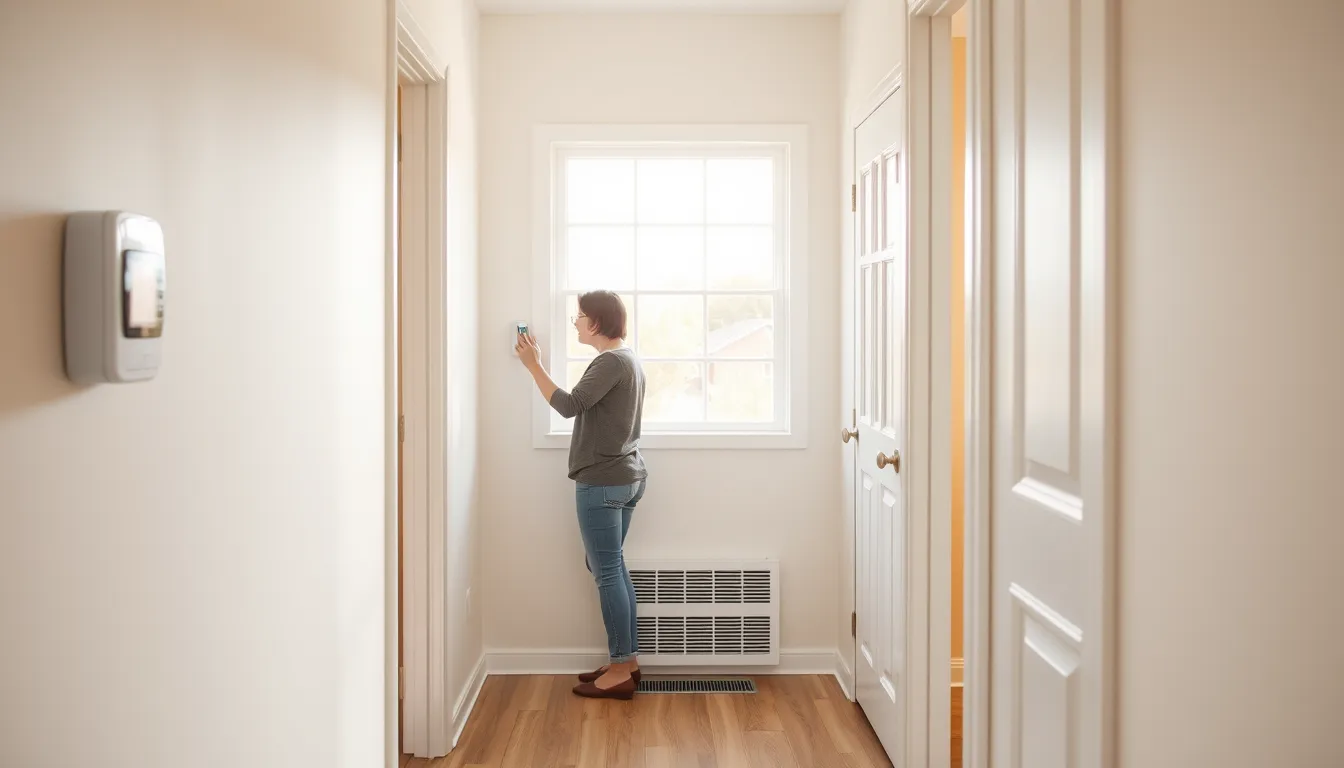
The quick answer
No. A lower thermostat setting usually reduces heating energy when it keeps the home cooler for a meaningful period, but it does not always reduce the bill. Short setbacks, heat-pump backup heat, fixed charges, and weather or billing changes can shrink or erase the dollar savings.
A lower thermostat setting is a tool, not a guarantee. It usually reduces heating energy when it lowers the average indoor temperature for a meaningful block of time. It does not always reduce the dollar amount on the bill, and in some homes the savings can be small enough to disappear into weather changes, fixed charges, or heat-pump recovery behavior.
The direct answer: no, not always
The common claim that a thermostat setback always saves money is too broad. The mechanism is straightforward: a cooler house loses heat more slowly to the outdoors, so the heating system runs less over time. That is why consumer guidance from the New Hampshire Department of Environmental Services says the startup-energy objection does not outweigh savings from turning the thermostat down when heat is not needed. The Missouri Public Service Commission makes a similar point in its thermostat fact sheet: reheat energy is real, but the home still saves while it remains at the lower temperature.
A UCL analysis of home energy use notes that energy use differs at different thermostat temperatures, so a single savings estimate cannot fit every household. Those sources do not say every setback produces a large bill reduction. The savings depend on how long the home stays cooler, how much cooler it gets, the outdoor temperature, the building envelope, the heating equipment, and the rate structure. A short setback can produce little net gain. A heat pump that uses backup resistance heat during recovery can turn a modest energy saving into a smaller dollar saving than expected. And a bill dominated by fixed charges will not fall much even when usage does.
Why a thermostat setback normally saves energy
Heat flows from warmer to cooler places. In winter, the inside of the home is warmer than the outside, and the rate of heat loss depends partly on that temperature difference. Lowering the indoor temperature reduces the difference, so the furnace, boiler, or heat pump has less lost heat to replace. The U.S. News article on thermostat savings summarizes the same practical idea: close the gap between outside and inside temperatures to reduce the energy bill. Air sealing and insulation affect how well that strategy works, because they change how quickly the home loses heat.

The recovery period can make the result harder to see. When the thermostat returns to its comfort setting, the heating system runs to warm the house and its contents back up. That reheat is not free. The Missouri fact sheet notes that the fuel required to reheat a building is roughly equal to the fuel saved as the building drops to the lower temperature. The net savings therefore come from the time the house sits at the lower temperature before heat is needed again. A long, stable setback has more opportunity to save than a brief dip.
The startup myth and the duration problem
A persistent claim says it costs more to reheat a house than to keep it at a steady temperature because the furnace works harder after a setback. The New Hampshire environmental agency says that conventional wisdom does not bear out: the savings from turning the thermostat down during periods when the heat is not benefiting anyone outweigh startup energy consumption. The Missouri fact sheet also calls the harder-working furnace a myth. A furnace may run for a longer single stretch during recovery, but that does not by itself erase the energy saved during the setback.
Duration is the practical catch. If a household lowers the thermostat for half an hour while running an errand, the house may barely cool, and recovery may begin before the lower setting has produced much savings. If the household lowers it for several hours while away or asleep, the home can spend more time at the lower temperature. The exact number of hours is not universal. It depends on the building’s thermal mass, outdoor temperature, insulation, air leakage, and how far the thermostat is set back. The general principle is that a longer period at a lower average indoor temperature is more likely to show up in energy use than a very short setback.
Heat pumps need a closer look
Heat pumps can be very efficient space-heating systems, but some are installed with auxiliary or emergency resistance heat. That backup heat can be expensive per unit of delivered heat compared with the heat pump’s normal operation. If a large thermostat setback is followed by a fast recovery, the system may use auxiliary heat to bring the house back to temperature. In that situation, the household may still save some energy during the setback, but the dollar savings can be smaller than a simple energy calculation suggests.
This does not mean heat-pump owners should never set back the thermostat. It means the strategy should match the equipment and controls. A modest setback, a longer recovery period, or a schedule that begins recovery before the house is needed can sometimes avoid unnecessary backup heat. Thermostat settings and lockout controls vary by model, so the practical step is to check the equipment manual or ask an HVAC professional rather than disabling safety features. If the thermostat shows auxiliary heat running during every recovery, compare a smaller setback with the current schedule before assuming the lower setting is saving money.
Energy savings are not the same as bill savings
A thermostat setback can reduce the energy used for heating, expressed in kWh for electric heating or therms for natural gas, without reducing the bill by the same proportion. Residential bills often include fixed customer charges, taxes, and other fees that do not change when usage changes. Some tariffs use tiers, time-of-use periods, or demand charges. A household that saves heating energy during an off-peak period may see a different dollar result than one that saves the same energy during a peak period. The relevant price for an extra unit of energy is the marginal price under the household’s current rate, which can differ from the average price obtained by dividing the total bill by total usage.
Weather and billing periods also complicate comparisons. A lower bill after a setback may reflect milder weather or fewer billing days, not the thermostat change. A higher bill after a setback may reflect a cold snap or a rate increase. For a fair test, compare usage per day over periods with similar outdoor temperatures, and separate changes in usage from changes in rates and fees.
An illustrative calculation, not a prediction
Suppose, for arithmetic only, that a household uses 1,000 kWh for electric heating in a 30-day month and a thermostat setback reduces that heating use by 5 percent. That is 1,000 × 0.05 = 50 kWh saved. If the household’s marginal electricity price is $0.18 per kWh, the modeled usage-charge saving is 50 × $0.18 = $9.00. If the reduction were 2 percent, the saving would be 20 kWh, or $3.60 at the same hypothetical price.
Those percentages and the price are illustrative assumptions, not typical results or a promise. The same method works with gas: if a household uses 80 therms for heating and a setback saves 5 percent, that is 4 therms; multiply by the marginal gas price per therm. The point is to show the chain from energy to dollars: energy saved = baseline heating energy × percentage reduction, then dollar savings = energy saved × marginal price. The percentage reduction is the hard part. It must come from a reasonable estimate or a controlled comparison, not from the thermostat setting alone.
How to test your own setback
A household can get a better answer without a laboratory by making a simple comparison. The goal is to change the thermostat schedule while holding other major factors as steady as practical.
- Record the current thermostat schedule, occupancy pattern, and any auxiliary-heat indicator.
- Collect daily energy use from the utility’s usage data or by reading the meter. For gas, use therms; for electric heating, use kWh.
- Pick a baseline period of one to two weeks at the current setting, then a test period with the setback during sleep or away hours. Note daily outdoor temperatures or heating degree days if available.
- Compare usage per day between periods with similar weather. If weather differs, normalize with heating degree days when the utility provides them, or treat the result as uncertain.
- Check whether backup heat, space heaters, or changed occupancy coincided with the test.
- Convert the difference in energy use to dollars with the marginal rate, and label the result as an estimate rather than a guaranteed saving.
Smart thermostats can make schedules more consistent and some provide runtime reports, but the U.S. News article notes that smart devices are a tool for cost-saving strategies, not a substitute for understanding the home. The same article recommends a home audit for air escaping, which is relevant because a leaky house changes both comfort and the size of any setback benefit.
When a lower setting is a poor fit
Some situations call for caution rather than an aggressive setback. In severe cold, a very low setting can increase the risk of frozen pipes or leave a heat pump struggling to recover. Homes with vulnerable occupants, unusual moisture problems, or equipment that is already using backup heat may need a more conservative schedule. A thermostat setback is not a substitute for safe operation of the heating system, and any equipment changes or control lockouts should be checked with a qualified professional.
A lower thermostat is most likely to save money when it lowers the average indoor temperature for several hours, uses a modest setting rather than an extreme one, avoids unnecessary auxiliary-heat recovery, and is evaluated over comparable weather and billing periods. It is least likely to produce a clear dollar saving when the setback is brief, the bill is dominated by fixed charges, or the recovery behavior raises the cost of the energy used.
For a practical next step, pick one unoccupied or sleep window, set a modest setback, and compare daily heating energy over two similar weather periods before changing the schedule again. If the data do not show a reduction, the thermostat is not the main lever; air sealing, insulation, equipment settings, or rate structure may deserve attention.
FAQ
If I turn the thermostat down for only an hour, will I save money?
Usually little, if anything. The home may not cool much before recovery begins, and reheat energy offsets much of the theoretical savings. Longer unoccupied or sleep periods are more likely to produce measurable savings.
Should I leave the thermostat at one temperature all day to avoid furnace startup?
No blanket rule supports that. Consumer guidance says the startup penalty is not as large as the energy saved by a meaningful setback; savings come while the home is at the lower temperature. Short setbacks, however, may not produce much net gain.
Do heat pumps save money with a setback?
They can, but recovery matters. A large, fast recovery may use auxiliary resistance heat, which can reduce or erase bill savings. Try modest setbacks and check whether the thermostat reports auxiliary heat use; ask an HVAC professional for system-specific advice.
Why did my bill not drop after I lowered the thermostat?
Weather, billing days, occupancy, and fixed charges can hide a usage reduction. Compare energy use per day over similar weather, and check whether backup heat or time-of-use pricing changed the cost of the energy you used.
Follow the evidence
Sources & references
- U.S. News, Does Lowering the Thermostat Really Save You Money? by Erica Sandberg, July 29, 2025. https://money.usnews.com/money/personal-finance/spending/articles/does-lowering-the-thermostat-really-save-you-money
- UCL News, Analysis: Energy bills - how much money does turning down the thermostat actually save? December 2, 2022. https://www.ucl.ac.uk/news/2022/dec/analysis-energy-bills-how-much-money-does-turning-down-thermostat-actually-save
- New Hampshire Department of Environmental Services, October 2022: Go Ahead, Turn Down That Thermostat! October 31, 2022. https://www.des.nh.gov/news-and-media/blog/october-2022-go-ahead-turn-down-thermostat
- Missouri Public Service Commission, Fact Sheet: Setting Your Thermostat, PDF, no publication date shown. https://psc.mo.gov/CMSInternetData/ConsumerInformation/SettingYourThermostat.pdf
Useful terms in this guide
- Thermostat setback
- A scheduled period when the thermostat is set lower than the comfort setting, usually while sleeping or away.
- Auxiliary heat
- Backup heating, often electric resistance, that some heat pumps use when they cannot meet the thermostat setting quickly or in cold weather.
- Marginal price
- The cost of one more unit of energy under the household's current tariff; it can differ from the bill's average price per kWh or therm.
- Heating degree day
- A weather measure based on how far the daily average outdoor temperature falls below a reference temperature; useful for comparing heating use across different weather.
Have a question about these numbers?
Tell us what needs a closer look.